
Student projects partnering with Tr’ondëk Hwëch’in, Nacho-Nyak Dun, Selkirk, and Little Salmon Carmacks First Nations on projects investigating responses and monitoring of ungulates and furbearers in response to climate change, land use intensity, and landscape alteration.
Landscape Change and Northern Mountain Caribou
Meagan Elliott, Kelsey Russell, Mark O’Donoghue, Fiona Schmiegelow
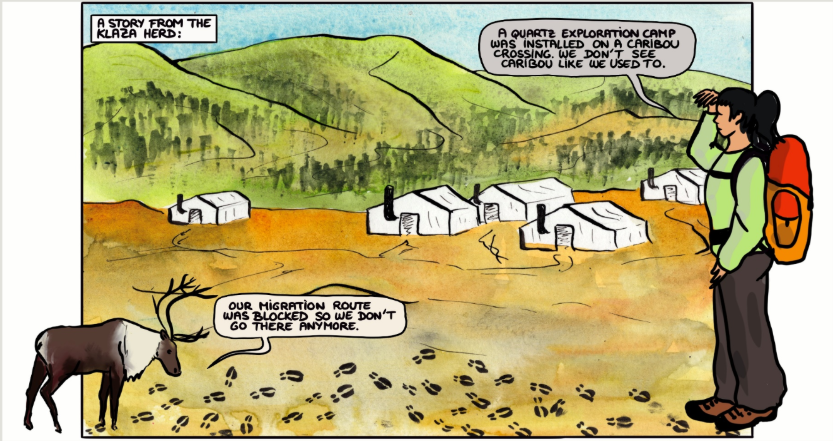
Tr’ondëk Hwëch’in, Nacho-Nyak Dun, Selkirk, and Little Salmon Carmacks
This research documents and quantifies trends in surface disturbance and its effect on the distribution of two Northern Mountain caribou (Rangifer tarandus caribou) herds, the Clear Creek and Klaza caribou herds using satellite imagery, field-based ground-truthing, and verification from community knowledge holders. I drew on multiple information sources and ways of knowing to better understand changes people observed in each caribou herd. These qualitative and quantitative analyses demonstrated alignment, indicating human disturbance influenced caribou distribution: Caribou avoided areas in their range with the most surface disturbance and access, and the effect of disturbance was unique to each season and increased over time. Roads, trails and mining and exploration features were the greatest sources of landscape change that contributed to changes in caribou distribution. Licensed harvest decreased over time in concert with caribou distribution changes identified by Indigenous and community knowledge holders and in the seasonal models. These multiple lines of evidence demonstrate human development has influenced the Clear Creek and Klaza caribou herds, and indicate Northern Mountain caribou require improved management of industrial activity, access and cumulative effects within herd ranges.
2021-2025
Wëdzey and Climate Change
Aidan Burghardt, Alice McCulley, Hilary Cooke, Crystal Fraser, Fiona Schmiegelow

Tr’ondëk Hwëch’in, Wildlife Conservation Society Canada
This project was created in response to community observations and concerns about how Wëdzey (caribou; Rangifer tarandus) are responding to climate change in Tr’ondëk Hwëch’in Traditional Territory. Our work is grounded in the enduring ancestral relationship between Wëdzey and Dënezhu, including a recognition of their knowledge, strength, and resilience. The objectives, methods, and outcomes of this project have been co-developed with Tr’ondëk Hwëch’in to ensure the research provides meaningful benefits to Wëdzey and community.
Our guiding questions are:
Q1: How do we conduct a collaborative research project that upholds Tr’ondëk Hwëch’in sovereignty?
Q2: How are Wëdzey adapting to climate change, what are the primary drivers of change for each population?
Q3: How is Wëdzey habitat changing now and in the future?
2021 – TBD
Active
Monitoring
Hugues Bernasconi, Alice McCulley, Norma Kassi, Fiona Schmiegelow
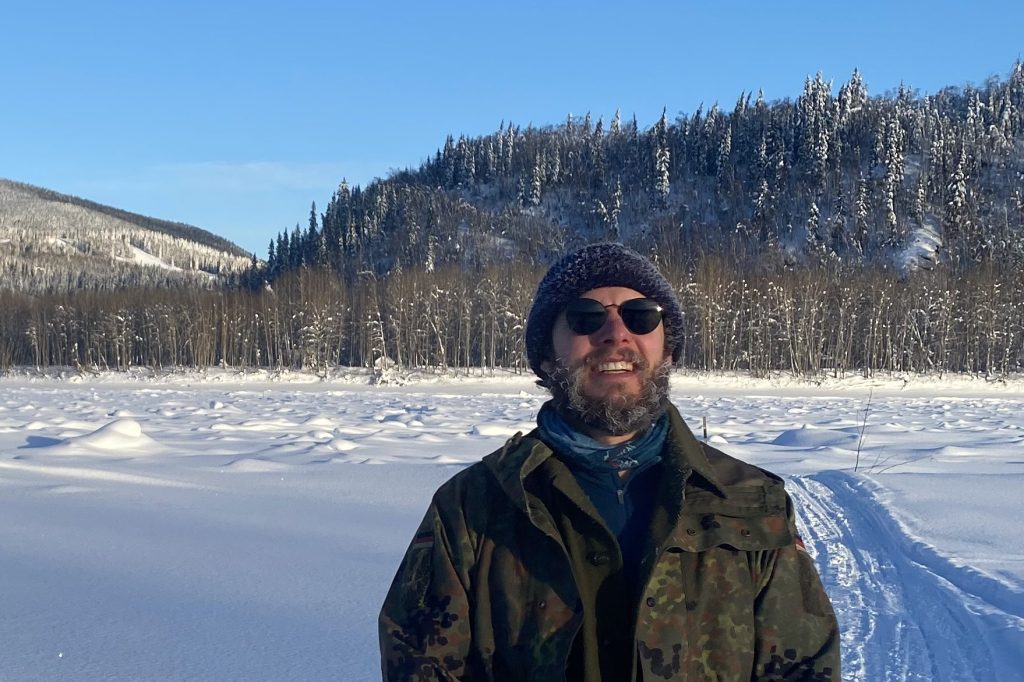
Tr’ondëk Hwëch’in, Wildlife Conservation Society Canada
Description pending.
2021 – TBD
Furbearers and Industrial Disturbance
Zach Fogel, Alice McCulley, Tom Jung, Fiona Schmiegelow
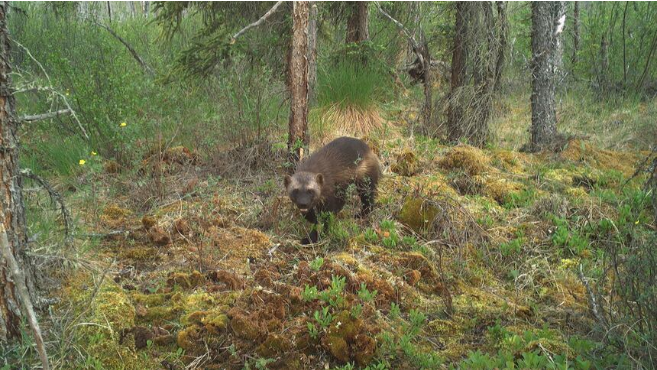
Tr’ondëk Hwëch’in, Yukon Government
Description pending.
2021-2026
Moose?
Anna Smith, Alice McCulley, Tom Jung, Fiona Schmiegelow
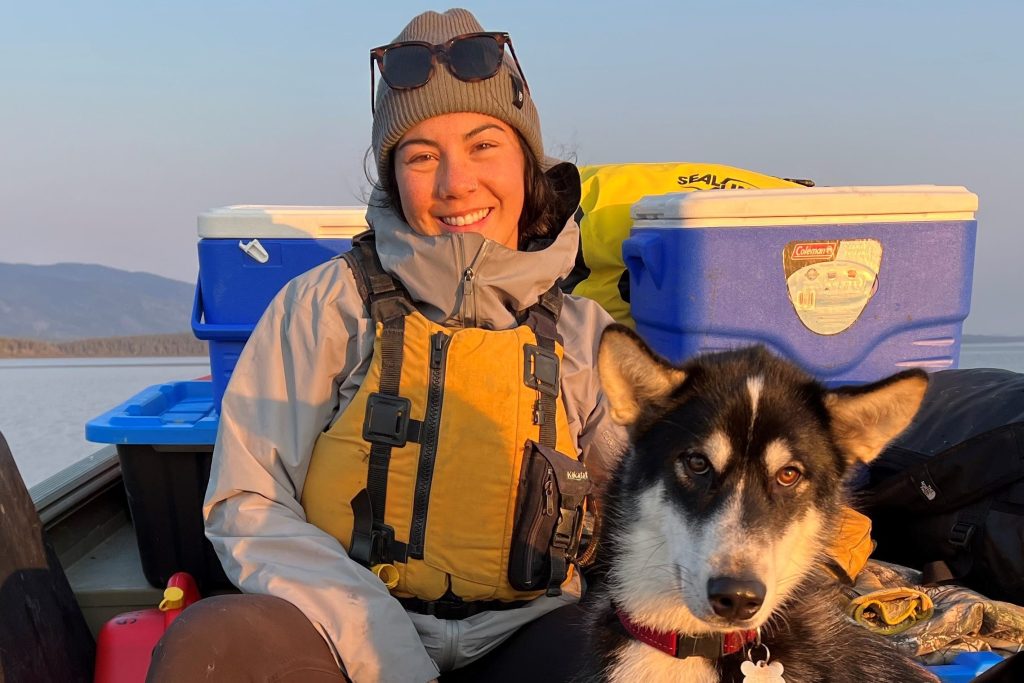
Tr’ondëk Hwëch’in, Yukon Government
Description pending.
2021 – TBD
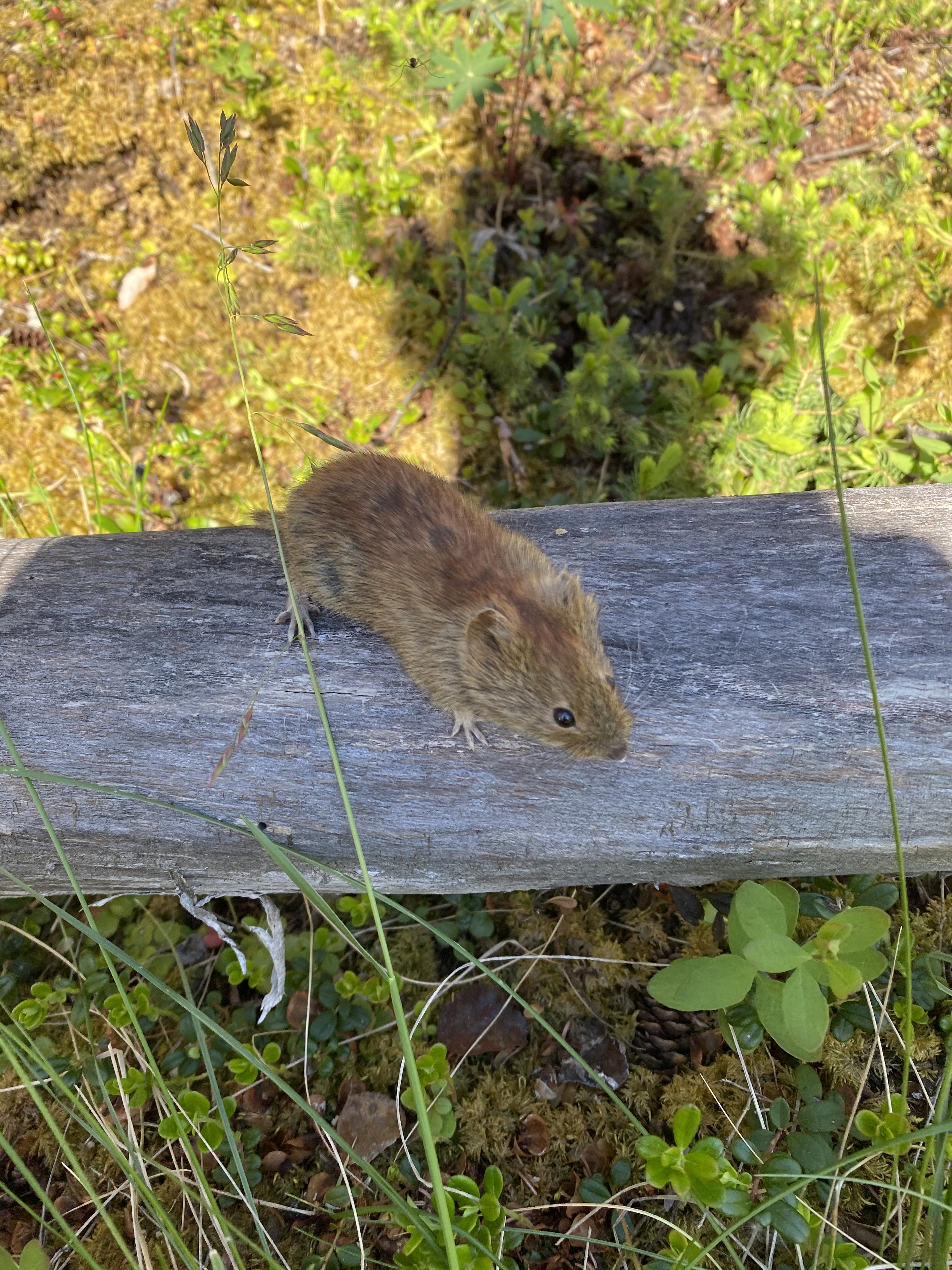
Short-term Responses of Boreal Small Mammals to a Mega-fire in Central Yukon
Gabriel Rivest, Katie Aitken, Mark O’Donoghue, Tom Jung, Fiona Schmiegelow
Yukon Government, Wildlife Conservation Society Canada
Forest fire regimes are significantly changing globally, primarily due to climate change. Rising temperatures and extended droughts have intensified fire weather conditions, leading to more frequent, severe and expansive wildfires across various ecosystems. These conditions have been observed extensively in the western boreal forest of North America, with fires becoming larger, more severe, and occurring at shorter intervals. Large wildfires of over 10,000 ha, also known as mega-fires, are becoming more frequent and more prominent on the landscape. These mega-fires often surpass historical fire behavior in scale and severity, leading to ecological consequences, including shifts in vegetation regimes, soil degradation, and disruptions to carbon storage dynamics. Despite their increasing frequency, the recent nature of these events makes it challenging to understand the long-term effects these fires may have on biological diversity and ecosystems. Research on mega-fires is essential to filling this knowledge gap and informing adaptive strategies to mitigate risks to biodiversity. Understanding how wildfires influence small mammal abundance and community composition is of significant ecological importance, particularly in fire prone ecosystems such as the boreal forest. Small mammals serve critical roles in ecosystem functioning, including seed dispersal, soil alteration, fungal spore distribution, and serving as prey for higher trophic levels making them a key part of the energy flow in boreal forests.
 Northern Systems Conservation Co-Lab